


.png)

Get Your Braces on Faster and More Comfortably
Discover a revolutionary approach to orthodontic treatment with DIBS AI. Our advanced technology makes the process of bonding braces quicker, more precise, and tailored just for you. Say goodbye to long appointments and hello to your new smile, faster.
What are Bonding Braces?
Bonding braces is the crucial process of attaching brackets to your teeth, which is the first step in your orthodontic journey. Traditionally, this could be a lengthy and meticulous process. However, with the integration of advanced technology, getting your braces fitted is now a more efficient and comfortable experience.
At our American Fork practice, we use the DIBS AI platform to transform this procedure. DIBS AI creates a digital replica of your teeth and determines the perfect placement for each bracket. This digital blueprint guides us, ensuring your braces are applied with unparalleled accuracy in a fraction of the usual time. This precision is not just about speed; it's about setting the foundation for a more effective treatment and a perfect final result.
The DIBS AI Advantage
Choosing an orthodontist who uses DIBS AI for bonding braces offers significant benefits that enhance your entire treatment experience. Here’s what makes our process different:
Faster Appointments
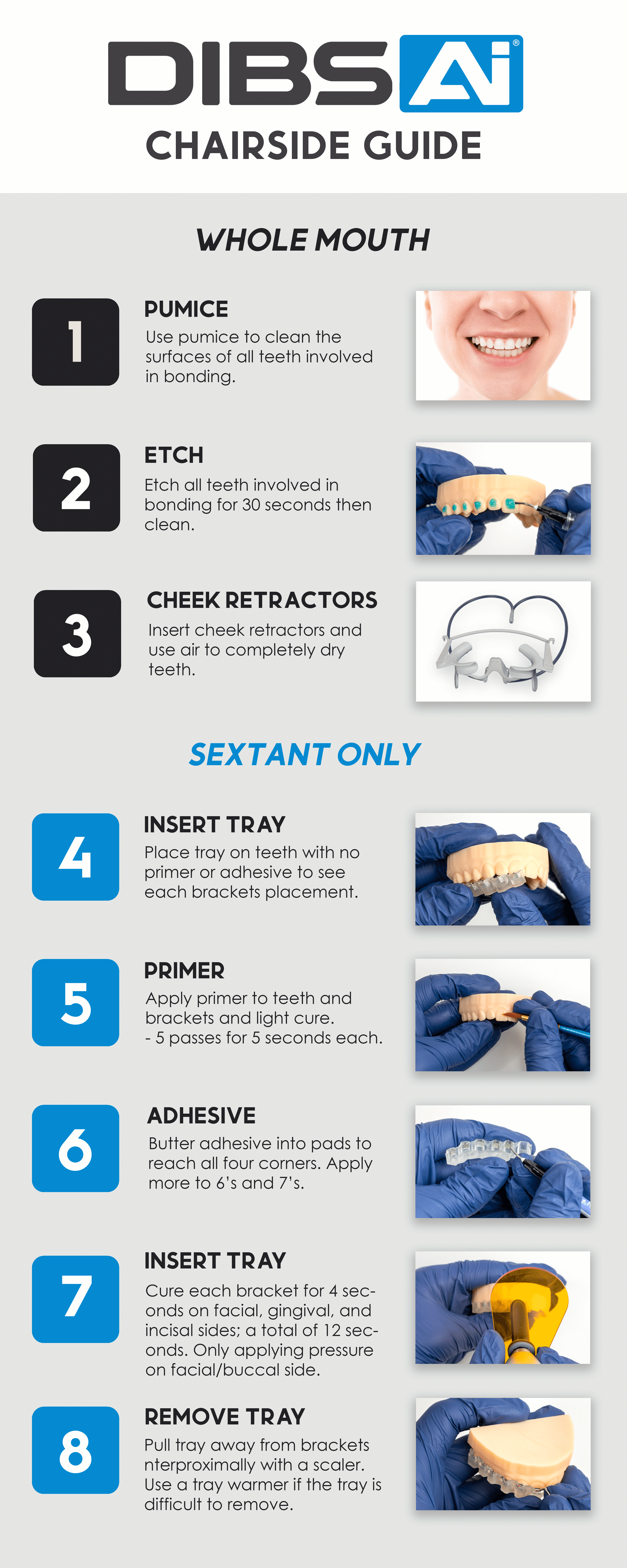
The DIBS AI system dramatically reduces the time you spend in the chair. Our digitally planned, indirect bonding trays allow us to place all your brackets at once, accurately and quickly. This means you can get your braces on and be on your way in as little as 30 minutes.
Unmatched Precision
Perfect bracket placement is key to successful orthodontic treatment. DIBS AI calculates the ideal position for each bracket based on your unique dental anatomy and treatment goals. This eliminates guesswork and ensures your teeth move efficiently and predictably toward their final, beautiful alignment.
Enhanced Comfort
Fewer adjustments and a shorter time in the chair contribute to a more comfortable orthodontic experience. Because the DIBS AI software maps everything out beforehand, the bonding process is smooth and stress-free.
Start Your Journey to a Perfect Smile
Ready to experience the future of orthodontics? Contact our American Fork office today to learn more about how DIBS AI makes bonding braces a simple, fast, and precise process.
FAQs
What Adhesives are Best if There are Debonds?
The following are our recommended adhesives. We also have 2 Procedural Recommendations.
Recommended Adhesives:
-
Transbond XT (3M)
-
LCR (Reliance)
-
Goto (Reliance)
-
Brace Paste (AO)
-
Connect (GC)
Procedurally, we recommend the following:
-
When applying adhesive, be sure to “butter in” the adhesive into the mesh of the bracket base. Most bond failures are between the mesh and adhesive.
-
If #1 above doesn’t work 100% – then you can also place a small amount of Primer on the bracket base before applying adhesive. Be careful to apply only a small amount to prevent running. Also, you should light cure the Primer before applying Adhesive!
Why are my Trays Sticking and Tearing?
-
Primer sticks to everything… including trays!
-
Don’t slather Primer on the teeth and especially stay away from the mesial/distal spaces.
-
Place the primer on the main area of the tooth where the bracket will be placed, you won’t have this problem.
Can I Reuse Trays for Debonds?
-
Absolutely! Done correctly, you can remove the trays, store them and section them in the future for debond as they occur. Simply use a knife, blade, or scissors to cut the tooth needed.
-
There are scenarios where a single jig will no longer fit that tooth…but those are rare!
How do I Reduce Flash?
-
Follow our suggested procedures in your Clinical Training Guide. Those techniques will help you reduce flash.
-
DIBS AI patented tray design allows for flash to be removed gingivally before curing. Any flash remaining typically is on the incisal edge as the bracket slide over the tooth. A quick burr will do the clean up job when that happens!
-
Indirect Bonding always includes a bit of flash, but you can certainly reduce it!